Thinking Teleologically
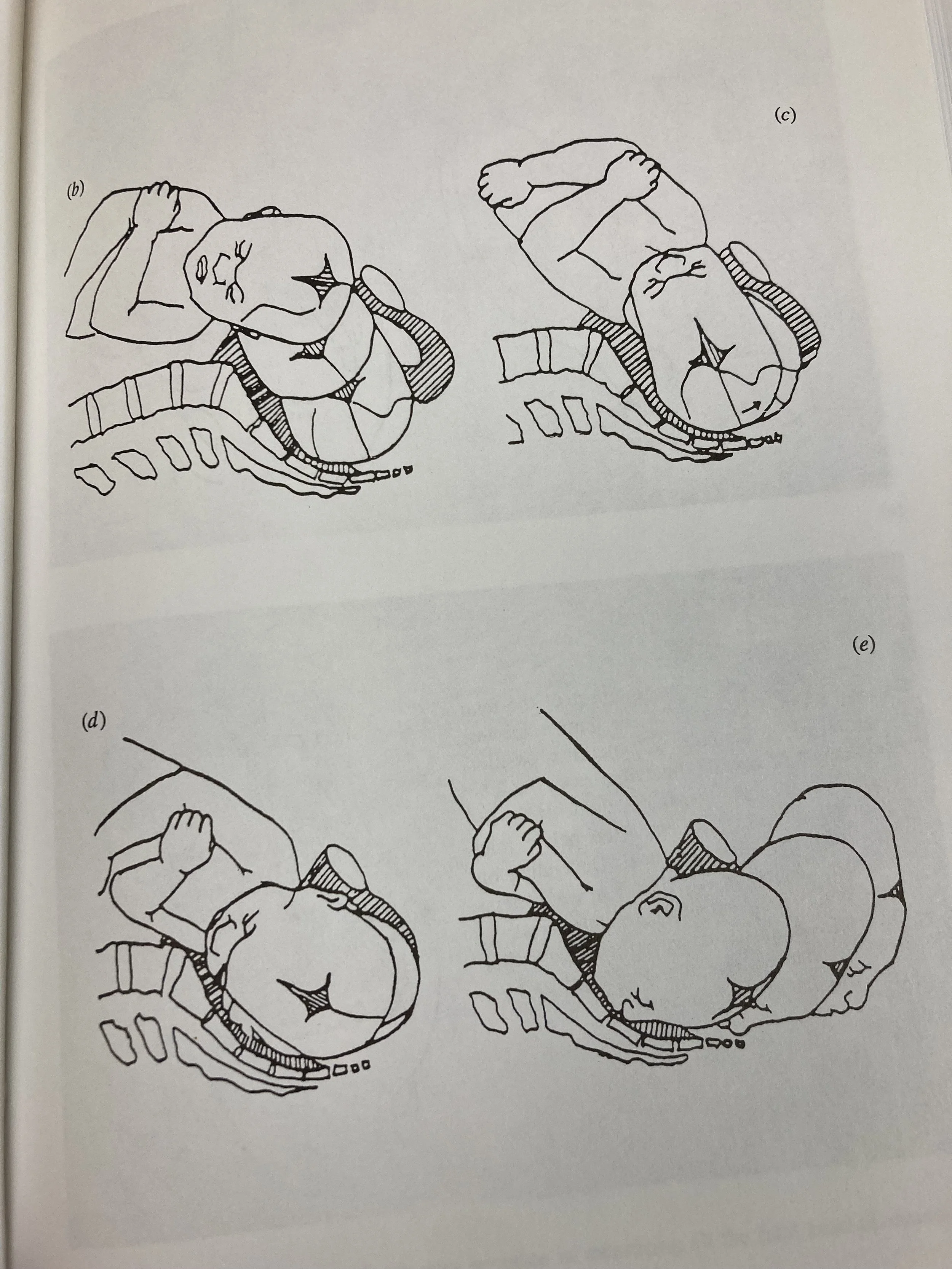
Cutaway views of the human pelvis and the machinations necessary for a fetus to successfully navigate through the pelvis during the birth process. From “Birth and Human Evolution: anatomical and obstetrical mechanics in primates.” M. Maurice Abitbol, M.D. Bergin & Garvey, Westport, CT, 1996
In apes, who are mostly quadruped, the pelvis in a straight cone which is oriented parallel to the ground most of the time and the pelvic contents need minimal support to stay within the pelvis and not come out the pelvic opening. Ditto for a fetus within the uterus.
In humans, our erect posture means the pelvic contents may fall out of the pelvis without significant support, but also the lumbar lordosis means that the pelvic cone has been bent. When a fetus goes through labor prior to birth, the large fetal head must navigate a significant curve of almost ninety degrees from when the head enters the pelvis until when the head exits the outlet. This means that prolonged labor is common leading to obstetric infection and/or uterine muscular tiring and subsequent postpartum bleeding. Maternal mortality prior to the twentieth century was routinely 1-2%.
The question is: What advantage did we gain as a species by an erect posture that offset this large mortality of the birthing process?
I would be interested in anyone’s thoughts.